Himlung Himal: Remote Himalayan Climbing Adventure in Nepal
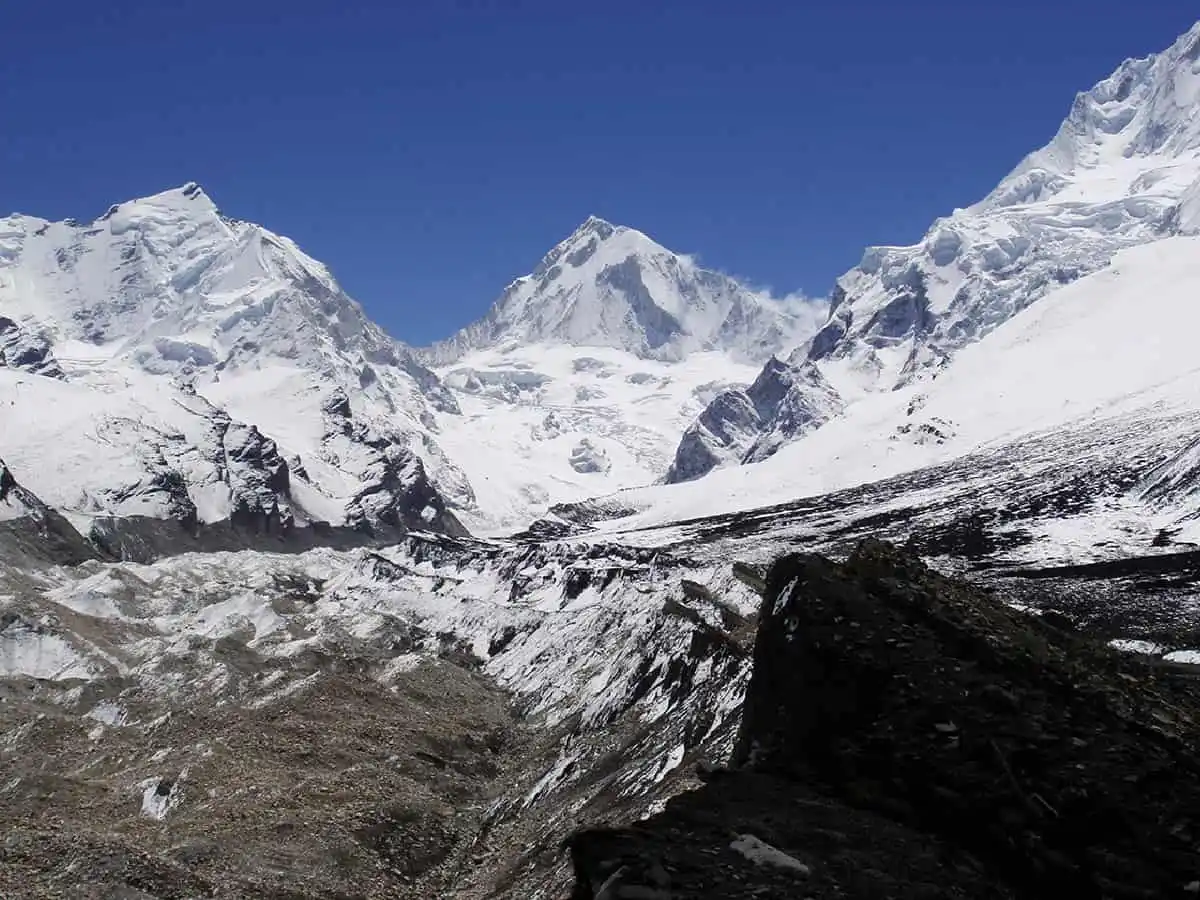
The Himlung Himal Expedition (7,126 m) is one of the finest high-altitude climbing adventures in Nepal, combining challenging mountaineering, spectacular Himalayan views, and cultural encounters. Himlung Himal is a popular training ground for experienced mountaineers preparing for the 8,000-meter behemoths like Everest or Manaslu in the remote Nar-Phu Valley near the Nepal–Tibet border. Unlike Nepal’s more popular climbing destinations, Himlung offers a quieter, more peaceful route with fewer climbers, well-established climbing camps, and a high summit success rate in the spring and autumn. During the trip, you will pass through traditional Tibetan-influenced villages, old monasteries, and beautiful alpine scenery, making the Himlung Himal Expedition an unforgettable adventure for those seeking an authentic Himalayan climbing experience.
Himlung Himal Location
Himlung Himal (7,126 m) lies in the remote Nar-Phu Valley of Manang District of Annapurna Conservation Area near the Nepal–Tibet border. The expedition begins in Kathmandu with a scenic drive to Besisahar and Koto, where the trek then begins. The trail traverses the restricted Nar-Phu Valley, traditional Tibetan Buddhist villages, ancient monasteries, yak pastures, alpine meadows, dramatic valleys, and glacial landscapes to reach Himlung Himal Base Camp (4,900 m). The journey is as memorable as the climb itself, as climbers are treated to breathtaking views of Annapurna II, Annapurna IV, Gangapurna, Tilicho Peak, Kang Guru, Manaslu, and many other surrounding Himalayan peaks on the way.
Himlung Himal History and Popularity
Himlung Himal was opened for commercial expeditions in 1992 and since then has become one of the most popular climbing peaks in Nepal at 7,000 meters. It is known for its high summit success rate, relatively easy climbing route, and lower objective risks than many other Himalayan peaks. These qualities make it a great option for experienced climbers training for future 8000-meter expeditions. Despite gaining popularity over the years, Himlung Himal is still much less crowded than mountains like Everest or Manaslu and offers a more peaceful, remote, and authentic Himalayan climbing experience.
Himlung Himal Expedition Difficulty
The Himlung Himal Expedition is considered a moderately technical but physically demanding climb and therefore is best suited to experienced climbers who have climbed mountains at high altitude before. It is considered one of the more accessible 7,000-meter peaks in Nepal, but it still requires great fitness, endurance, and proper acclimatization to reach the summit. Climbers should be familiar with crampons, ice axes, fixed ropes, harnesses, ascenders (jumars), and basic glacier travel skills. The real challenge is not the technical climbing but the extreme altitude above 7,000 meters, where thin air, cold temperatures, and long summit days push both physical and mental limits. Climbers need to have experience on 6,000-meter peaks, good cardiovascular fitness, and basic snow and ice climbing skills for a safe and successful ascent.
Himal Himal Climbing Route
The Himlung Himal Expedition begins with a scenic drive from Kathmandu to Besisahar, then a trek through Koto, Meta, and the traditional village of Phu before reaching Himlung Base Camp (4,900 m). This gradual climb gives climbers a chance to acclimatize while enjoying the stunning landscapes and unique culture of the remote Nar-Phu Valley. At base camp, climbers take it easy for a few days, practicing their climbing skills and getting themselves ready for the ascent. The route then goes on to Camp I (5,450 m) via the Pangir Glacier, then to Camp II (6,000 m) across snow slopes and glacier terrain. Camp III, at 20,800 feet (6,350 meters), lies on steeper slopes of snow and ice and is where climbers make their final preparations for their summit bid. The day of the summit begins at around midnight with a long ascent over snow slopes and the upper ridge to the 7,126-meter summit. The route is not too technical but is a physically demanding climb due to extreme altitude. Climbers are rewarded with unforgettable views of Annapurna, Manaslu, Tilicho Peak, Kang Guru, and the vast Tibetan Plateau before making their safe way back down to Base Camp.
Best Time for Himlung Himal Expedition
The best time to climb Himlung Himal is during spring (April to May) and autumn (late September to early November), when the weather is generally stable and climbing conditions are at their best. Spring is the most popular season because it offers warmer temperatures, reliable weather, excellent snow conditions, longer daylight hours, and a higher chance of reaching the summit. Autumn is another excellent time to climb, with clear skies, dry weather, crisp mountain views, and stable conditions, although temperatures are colder at higher elevations. It is best to avoid the monsoon season (June to August) due to heavy rainfall and poor visibility, as well as winter (December to February), when extreme cold, strong winds, and heavy snowfall make climbing much more difficult.
Why Choose the Himlung Himal Expedition?
The Himlung Himal Expedition is one of the best 7,000-meter climbing adventures in Nepal. It offers the perfect combination of high-altitude mountaineering, beautiful scenery, and cultural experiences. It is a good choice for climbers preparing for future 8,000 m expeditions, thanks to its well-established climbing route, high summit success rate, and moderate technical difficulty. Himlung offers a more peaceful and genuine Himalayan adventure than the busy summits of Everest, Manaslu, or Ama Dablam. The walk takes you through the remote Nar-Phu valley, visiting traditional Tibetan Buddhist villages, ancient monasteries, and pristine mountain scenery, with spectacular views of Annapurna II, Annapurna III, Gangapurna, Tilicho Peak, Kang Guru, Manaslu, and surrounding Himalayan peaks. Himlung Himal is one of the most rewarding expedition peaks in Nepal, with experienced guides, organized high camps, and an unforgettable blend of adventure, culture, and alpine climbing.