Pisang Peak Expedition
Pisang Peak, also known as "Pisang Peak Climbing," "Jong Ri," or "Chuli," is a stunning trekking and climbing peak in Nepal’s Annapurna region. This iconic mountain reflects Nepalese culture and their passion for adventure in the Himalayas. The climb takes adventurers through diverse landscapes, from lush green forests to snowy, rugged high-altitude terrain. While the ascent challenges climbers with technically demanding sections, reaching the summit rewards them with breathtaking panoramic views of the Himalayas, making every step of the journey worthwhile.
Pisang Peak: A Classic Himalayan Adventure in the Annapurna Region
Pisang Peak Climbing is a rewarding Himalayan adventure that combines the beauty of the Annapurna Circuit with the excitement of reaching a 6,091-meter summit. The journey takes you through green valleys, pine forests, traditional villages, ancient monasteries, and the dry alpine landscapes of Upper Manang before reaching the snow-covered slopes of Pisang Peak. Along the way, you can experience local Gurung and Manangi culture while gradually acclimatizing to higher altitudes. The climb requires good fitness and basic mountaineering skills, including the use of crampons, an ice axe, harness, and ropes. For fit trekkers looking to go beyond a regular trek and experience their first real Himalayan peak, Pisang Peak offers a memorable and rewarding adventure in the heart of the Annapurna region.
Location of Pisang Peak
Pisang Peak stands at 6,091 meters (19,984 feet) in Manang District of Gandaki Province, Nepal, within the Annapurna Conservation Area. The mountain rises above the village of Pisang along the classic Annapurna Circuit. The journey begins with a drive from Kathmandu to Besisahar and continues through the Marsyangdi Valley, passing Dharapani, Chame, and Upper Pisang before heading toward Pisang Peak Base Camp. One of the best things about the location is the changing landscape, from green valleys and forests to the dry, rugged highlands of Manang. Along the route and from the higher slopes, climbers can enjoy spectacular views of Annapurna II, III, and IV, Gangapurna, Tilicho Peak, Chulu Peak, and other surrounding Himalayan mountains.
Climbing History of Pisang Peak
Pisang Peak was first successfully climbed in 1955 by a German expedition team and has since become one of Nepal’s popular trekking peaks. Its appeal comes from the combination of a scenic approach through the Annapurna region and a genuine Himalayan climbing experience. After leaving the Annapurna Circuit, climbers enter a more alpine environment with steep slopes, snow, and changing mountain conditions. Today, Pisang Peak remains a popular choice for trekkers and climbers who want to gain high-altitude mountaineering experience and enjoy a rewarding 6,000-meter summit without committing to a long expedition on a higher peak.
Pisang Peak Climbing Route
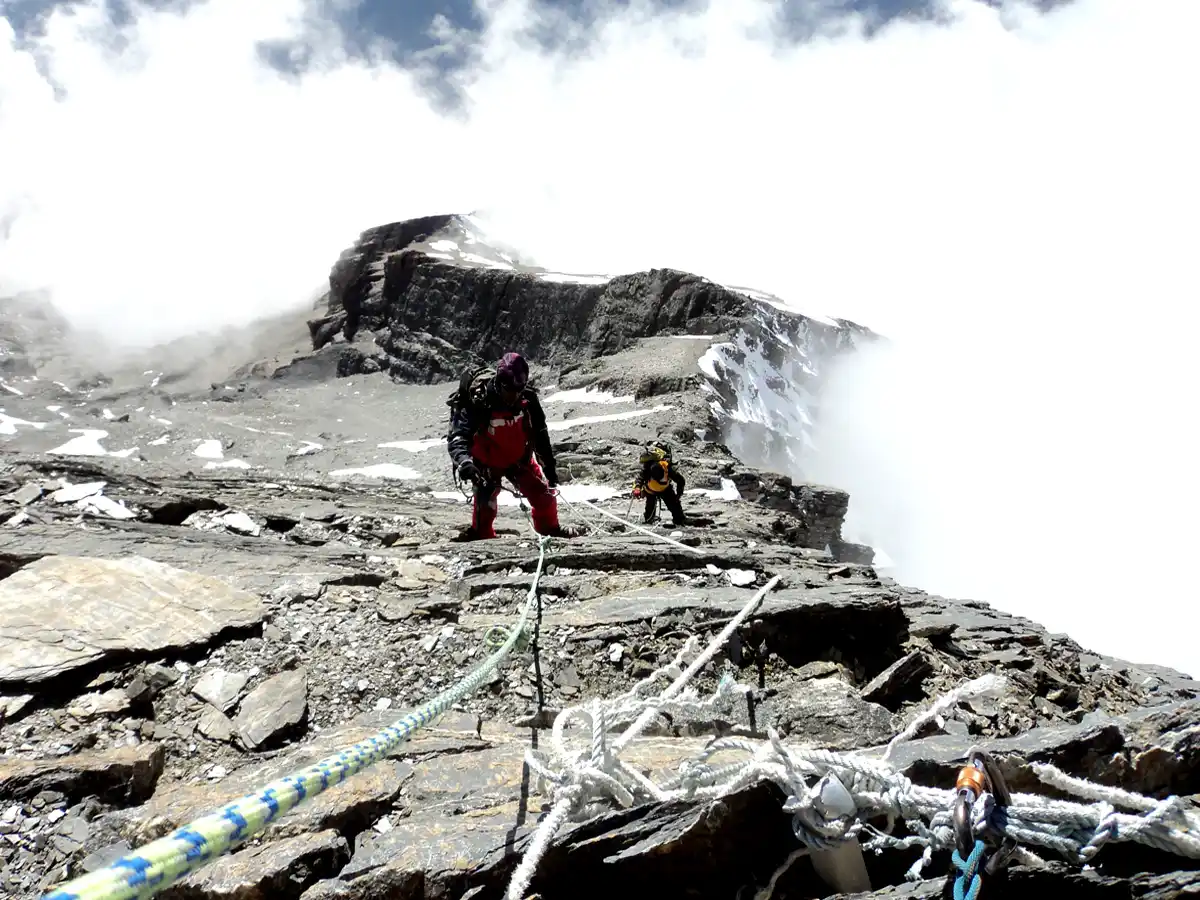
The Pisang Peak climbing route follows the Annapurna Circuit and gradually moves from the lower Marsyangdi Valley into the high alpine landscape. The journey starts with a drive from Kathmandu to Besisahar, followed by trekking through Dharapani, Chame, and Upper Pisang. From Upper Pisang, the trail leaves the main circuit and heads toward Pisang Peak Base Camp, where climbers acclimatize and prepare for the climb. The route then continues to High Camp through rocky and snowy terrain, where crampons, ice axes, harnesses, and ropes may be needed. The summit climb usually begins before dawn and involves steep sections and changing mountain conditions. After reaching the 6,091-meter summit, climbers enjoy beautiful views of the Annapurna range before descending and returning to the Annapurna Circuit.
Pisang Peak Climbing Difficulty
Pisang Peak is a moderately technical trekking peak that requires good fitness, endurance, and proper preparation. At 6,091 meters, the climb involves steep rocky and snowy sections, cold weather, high altitude, and a long summit day. Previous high-altitude trekking experience is recommended, while basic skills with crampons, an ice axe, harness, and climbing ropes are helpful. With gradual acclimatization, proper preparation, experienced guides, and careful attention to weather and mountain conditions, fit and well-prepared trekkers can take on Pisang Peak as a rewarding introduction to Himalayan mountaineering.
Summit Views from Pisang Peak
Reaching the 6,091-meter summit of Pisang Peak is one of the most rewarding moments of the journey. On a clear day, climbers can enjoy stunning views of Annapurna II, III, and IV; Gangapurna; Tilicho Peak; Chulu peaks; and other surrounding Himalayan mountains. Below, the valleys and villages of Manang, along with glaciers and rugged mountain landscapes, create a spectacular backdrop. After days of trekking, acclimatization, and climbing, standing at the summit offers not only incredible views but also a strong sense of achievement and an unforgettable Himalayan memory.
Why Choose Pisang Peak Climbing?
Pisang Peak is a fantastic choice for those who want to combine the Annapurna Circuit Trek with a genuine Himalayan climbing experience. The journey takes you through beautiful valleys, forests, traditional Gurung and Manangi villages, Buddhist monasteries, and gradually into rugged alpine terrain with snow and glaciers. At 6,091 meters, the peak offers a rewarding challenge for fit, well-prepared trekkers who want to develop basic mountaineering skills and gain high-altitude experience. The summit also provides spectacular views of the Annapurna range and surrounding Himalayan peaks. With its blend of culture, scenery, trekking, and climbing, Pisang Peak offers a memorable Himalayan adventure without the long commitment of a major expedition.
Why Choose Ethic Himalaya for Pisang Peak?
At Ethic Himalaya, we believe a successful climb is about more than reaching the summit. Our experienced local climbing team provides careful planning, proper acclimatization, safety, and personal support throughout the journey. We understand the Annapurna region and its changing mountain conditions, allowing us to make practical decisions based on weather, route conditions, and your individual needs. Before the summit attempt, our guides also provide support with essential climbing equipment and techniques such as crampons, ice axes, harnesses, and ropes. As a Nepal-based company, we work closely with local staff and communities while respecting the mountain environment and local culture. From Kathmandu to the summit and back, we aim to make your Pisang Peak climbing experience safe, well-organized, responsible, and enjoyable.